-
Need Help?

Need Help?
Contact your Sales Engineer

LED Video Wall vs LCD: Complete Comparison Guide 2026
DISPLAY COMPARISON · 2026
LED Video Wall vs LCD: Complete Comparison Guide
Two very different display technologies that get compared constantly. Here's how LED video walls and LCD commercial displays actually stack up across size, brightness, lifespan, cost, and where each one wins.

The short version
An LCD commercial display is a single integrated screen — like an oversized TV. An LED video wall is a matrix of self-emissive LED panels tiled into any size you want. They're not really competing for the same job: LCD dominates under ~98″ diagonal in controlled lighting; LED video walls dominate above ~100″ and in bright/outdoor environments.
How each technology actually works
LCD displays
An LCD (Liquid Crystal Display) commercial monitor is a single panel made of three layers: a white LED backlight at the back, a liquid crystal layer that twists light to filter it, and a color filter that produces the final pixel color. You see what the backlight pushes through the LCD layer. Commercial LCD displays sold by Samsung, LG, Sharp/NEC, Sony, ViewSonic and others typically come as integrated units in fixed diagonal sizes (43″, 55″, 65″, 75″, 86″, 98″, and occasionally up to 110″).
LED video walls
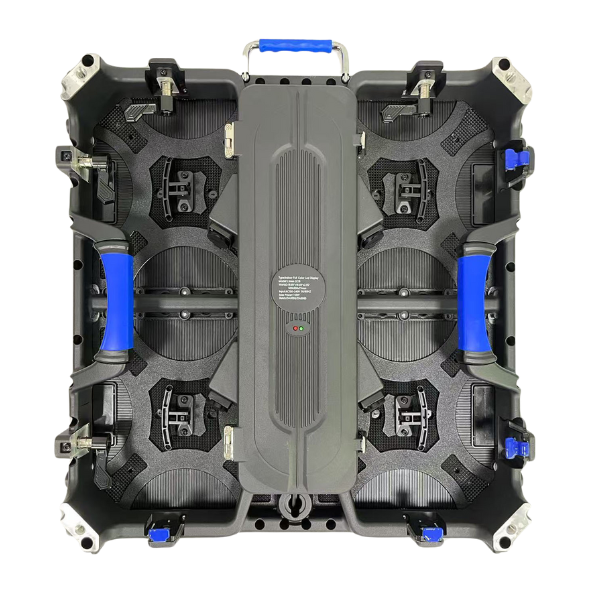
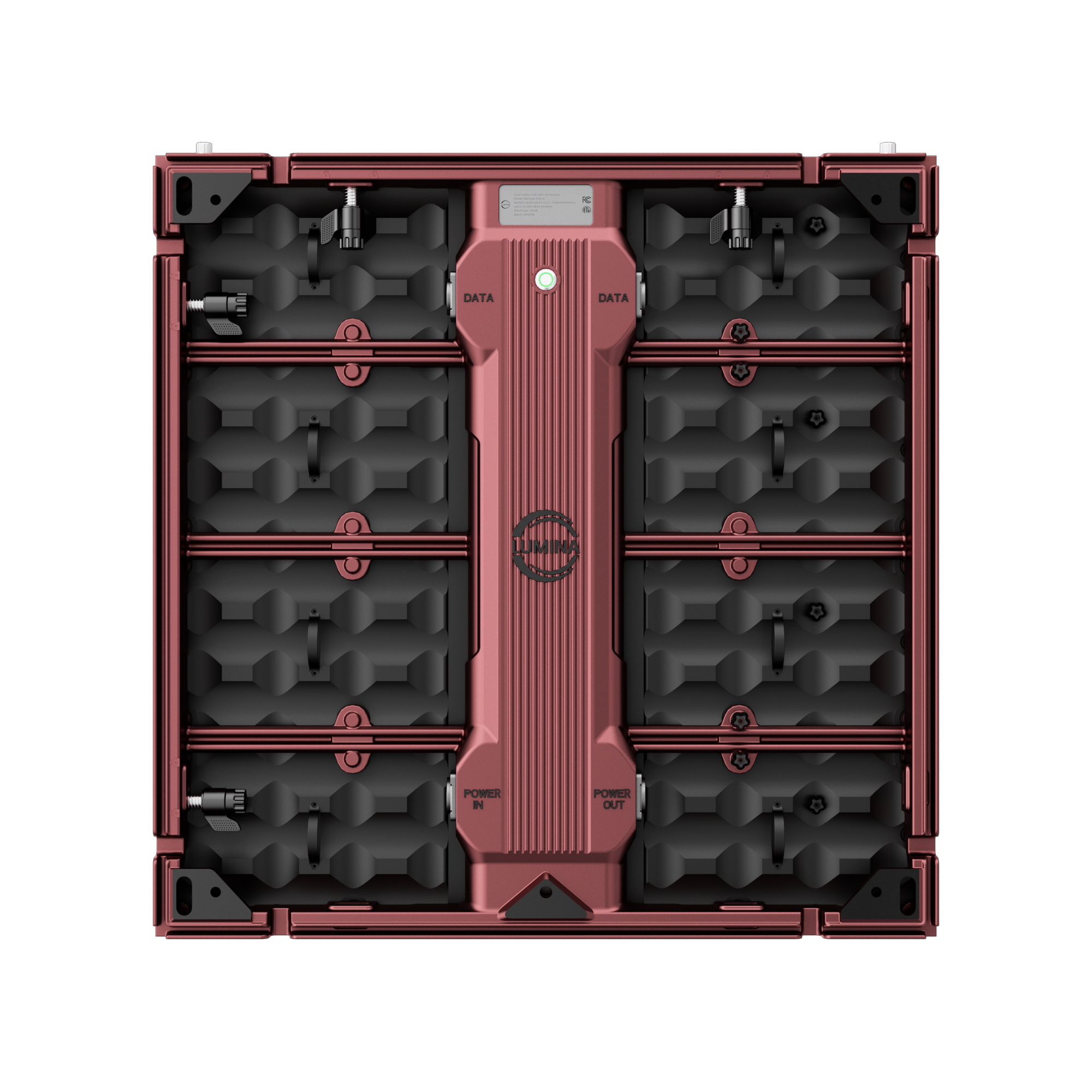
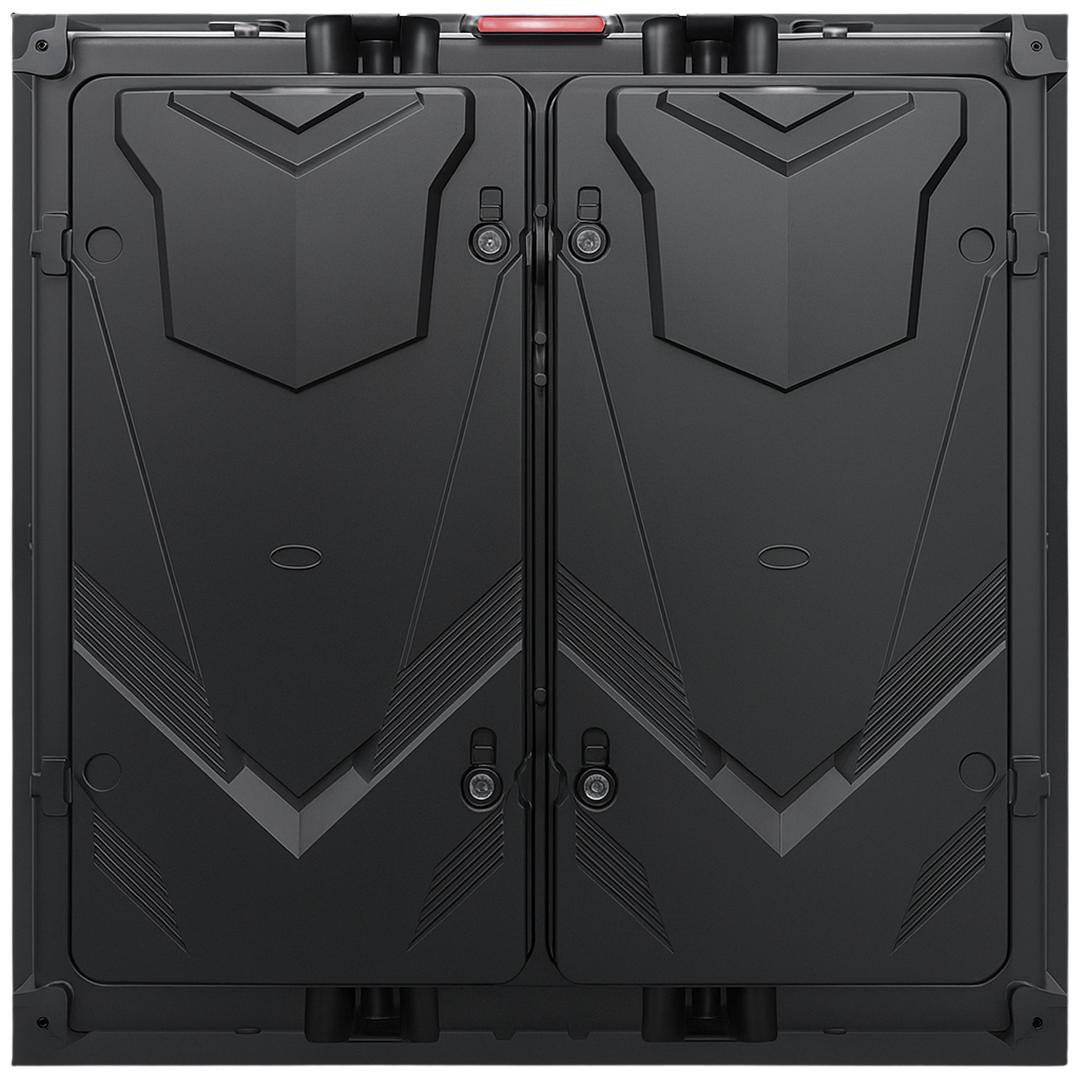
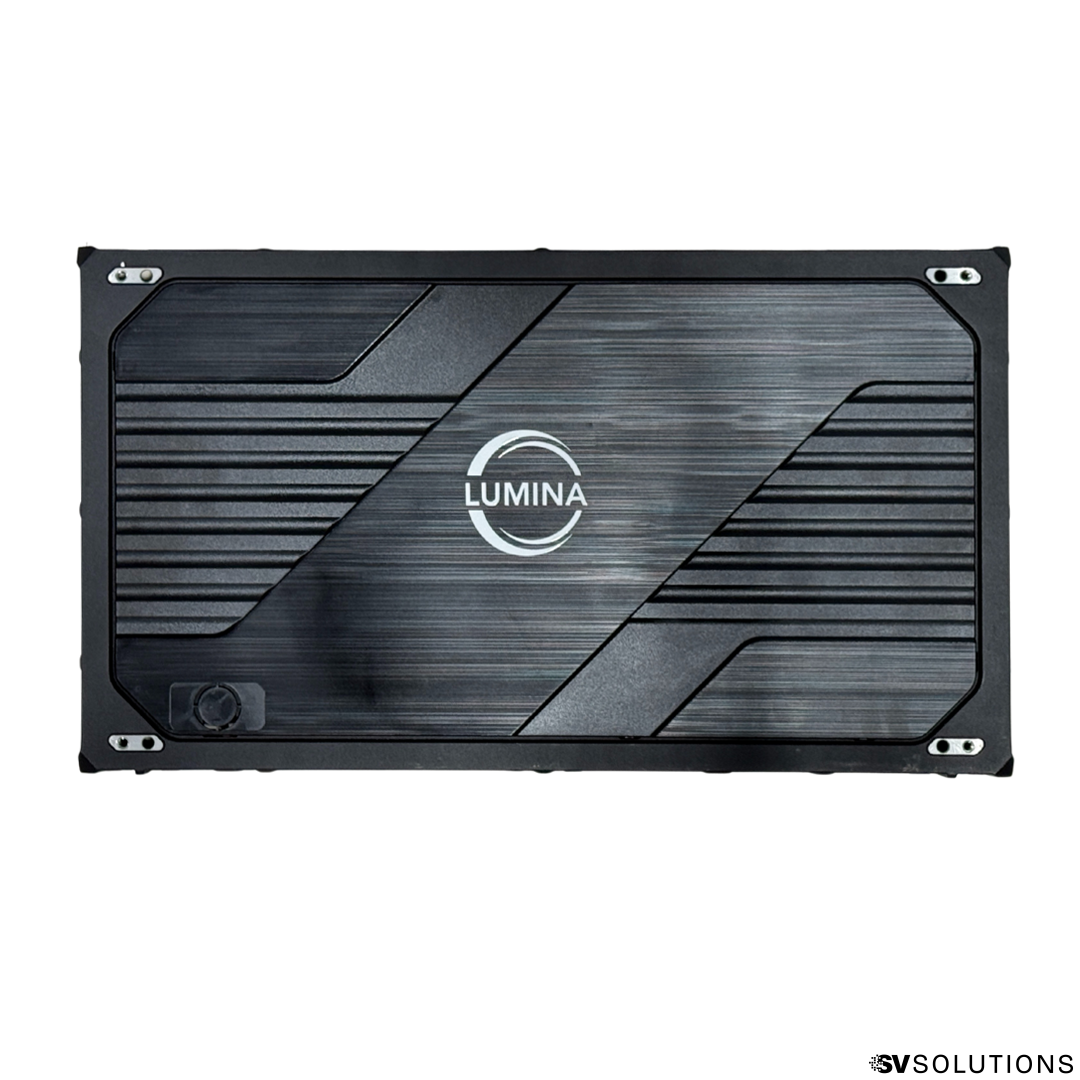
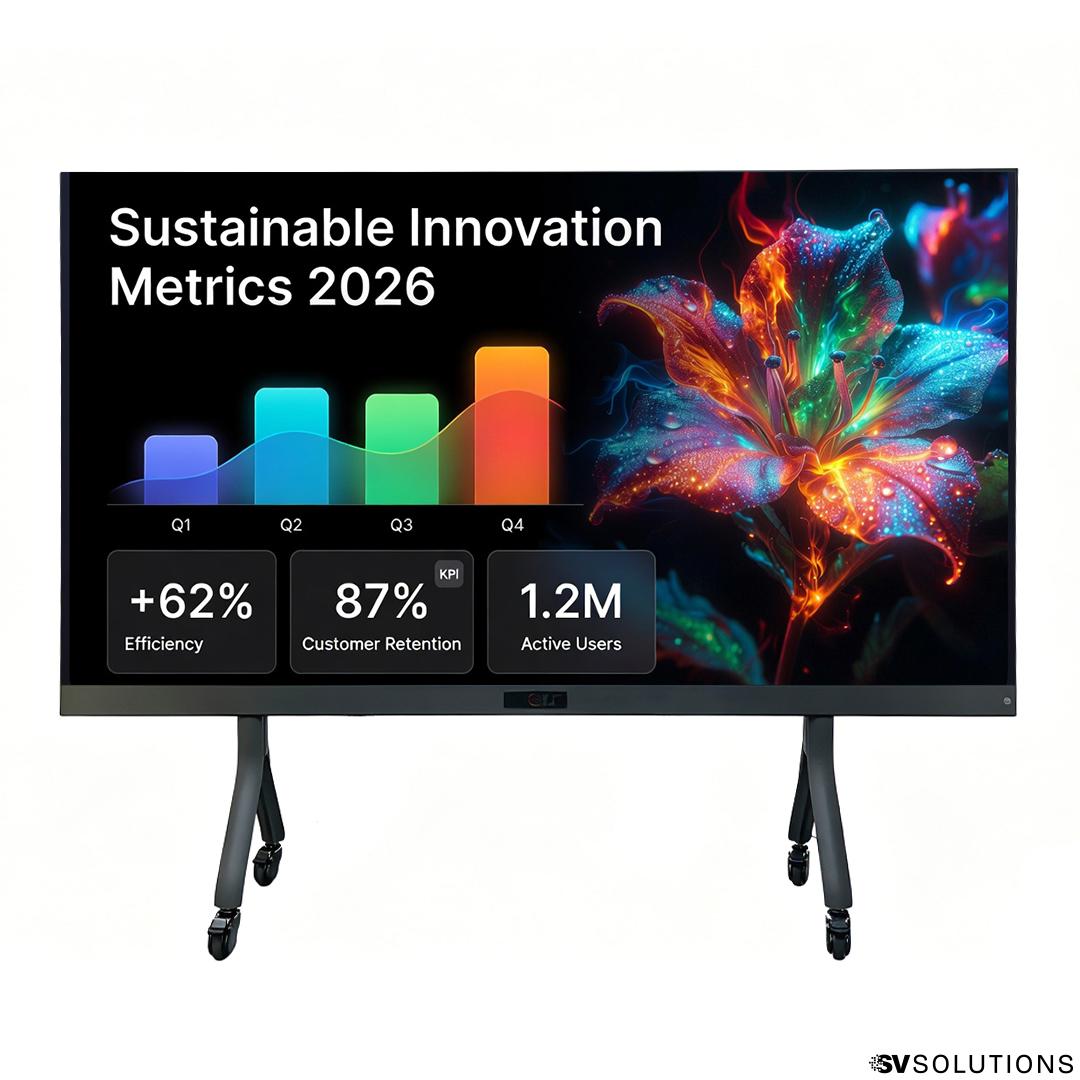
An LED video wall is built from modular LED panels (commonly 500×500 mm or 960×960 mm cabinets). Each pixel is a tiny LED that emits its own light directly — no backlight, no liquid crystal layer. You tile as many panels as needed to build the size you want, then control them with a NovaStar processor (see our NovaStar processors guide). Our SV Solutions LUMINA bundles ship in 119 standard sizes from 116″ to 360″ diagonal — and any size above or beyond is buildable as a custom configuration.
Side-by-side spec comparison
| Specification | LCD Commercial Display | LED Video Wall (SV LUMINA) |
|---|---|---|
| Max practical size | Up to ~98–110″ (single unit) | Modular, any size; standard bundles to 360″ |
| Size increments | Fixed (43, 55, 65, 75, 86, 98″) | Continuous via panel count |
| Brightness (typical) | 350–700 NITS indoor; 1,500–2,500 NITS for high-brightness outdoor LCD | 600–800 NITS indoor (LUMINA 500/Nanolite); 6,000 NITS outdoor (LUMINA 960 Outdoor) |
| Contrast ratio | 1,000:1 to 5,000:1 (LED-backlit LCD) | ≥5,000:1 (LUMINA 500/960); ≥10,000:1 (MicroLED COB) |
| Pixel structure | Backlit liquid crystal (RGB subpixels) | Emissive LED chip per pixel |
| Bezel between units | Single panel = no bezels; multi-display videowalls have visible 0.9–3.5 mm bezels between tiles | No bezels — panels tile seamlessly |
| Response time | 5–8 ms typical, lower for gaming-grade | Instant (each LED is direct) |
| Viewing angle | 178°/178° on premium IPS panels | 160°/160° (LUMINA 500/960); 170°/170° (Nanolite) |
| Lifespan | ~30,000–50,000 hours to half-brightness (backlight) | ~100,000 hours typical for LED chips |
| Outdoor capability | Specialized outdoor LCD exists but limited; most commercial LCD is indoor-only | Native outdoor IP65 with -20°C to +70°C operating range (LUMINA 960 Outdoor) |
| Serviceability | Replace whole unit on failure | Module-level swap; spare modules included in bundle |
| Starting price | ~$1,500 for 55″ commercial LCD; ~$8,000 for 98″ | $9,520 for 136″ LUMINA 960 Indoor 4mm complete bundle |
LCD specs are industry-typical ranges from current commercial-display manufacturer datasheets (Samsung, LG, Sharp/NEC, ViewSonic, Sony product lines as of 2026). LED Video Wall specs are SV Solutions LUMINA verified specs from our panel datasheets.
When LCD wins
There are four clear scenarios where a commercial LCD is the better pick over an LED video wall:
- Diagonal under ~98″ in a controlled indoor environment — A high-quality 75″ or 86″ commercial LCD will look great in a conference room or executive office, costs less than the smallest LED video wall, and ships as a turnkey unit with built-in tuner/USB/HDMI. LED video walls only start being competitive above 110″ where LCD options thin out.
- Single-source desktop / wall-mounted use — A commercial LCD plugs into one HDMI source and works. No processor configuration, no NovaLCT calibration, no receiving card setup.
- Budget under ~$5,000 and you only need 65–86″ — Commercial LCDs in this range typically run $2,000–$6,000. LED video walls require minimum bundle configuration of ~$9,500.
- Touch interactivity at smaller sizes — Most commercial LCDs offer optional capacitive touch overlays at 55–86″. LED touchscreen options (like our LUMINA All-in-One 0.78mm at 136″) start at 136″ and $29,750.
When LED video walls win
Five scenarios where the LED video wall is the clear winner:
- Anything above ~100″ diagonal — LCD options past 98″ are limited, expensive, and the bezel-less single-unit experience disappears. LED video walls give you any size you want with no bezels between tiles. Our LUMINA bundles go from 116″ to 360″ as standard; custom builds go bigger.
- Outdoor or bright-ambient environments — LCD displays typically max out around 1,500–2,500 NITS even in high-brightness commercial models. Our LUMINA 960 Outdoor delivers 6,000 NITS with IP65 sealing and -20°C to +70°C operating range — built specifically for direct-sun and weather exposure.
- Wide aspect ratios or unusual shapes — LCD displays are fixed 16:9 (or 21:9 ultrawide in limited models). LED video walls are built from any panel count, so a 32:9 ultra-wide, square 1:1, or curved configuration is just a different panel arrangement.
- Long expected operating life — LED chips are rated for ~100,000 hours; LCD backlights typically reach half-brightness around 30,000–50,000 hours. For 8-hour/day commercial use, that's the difference between ~10 years (LCD) and ~30+ years (LED video wall).
- Module-level serviceability matters — When an LCD fails, you replace the whole unit. When a module in an LED video wall fails, you swap that one module in minutes with the supplied magnetic puller. Our bundles include spare modules from day one.
Cost reality check at common sizes
A common question is "for a 100″ display, which is cheaper?" The honest answer depends on context:
| Size target | LCD option (typical) | LED video wall (SV) | Notes |
|---|---|---|---|
| ~75″ | $2,000–$4,000 commercial LCD | Not available — below our minimum 116″ | LCD wins at this size |
| ~98″ | $5,500–$12,000 commercial LCD | Not available — below 116″ | LCD wins (premium unit) |
| ~116″ | ~$15,000+ (rare premium LCD) | $9,735 (LUMINA 500 3.9mm) | LED wins on price |
| ~136″ | Very rare; $25,000+ if available | $9,520 (LUMINA 960 Indoor 4mm) | LED wins decisively |
| ~220″+ | Not practical as single LCD | $20,560+ (LUMINA 960 Indoor 4mm) | LED video wall only option |
LCD pricing reflects 2026 commercial-grade single-unit pricing from major manufacturers (43–98″ commercial signage line). Pricing varies by brand, brightness, touch capability, and warranty tier.
What about "LCD video walls" (tiled multi-LCD setups)?
Some integrators build "LCD video walls" by tiling 4, 9, or 16 commercial LCDs in a grid. These exist but have a key drawback: visible bezel lines between every tile. Even the thinnest modern LCD bezels (0.9–1.8 mm per side, so 1.8–3.6 mm of visible black line between adjacent screens) are noticeable from any reasonable viewing distance. LED video walls have no bezels — panels tile pixel-to-pixel with no visible seams.
If your project absolutely requires the LCD tile approach for budget or interactivity reasons, that's a valid choice. But for an unbroken visual surface at large sizes, the LED video wall is the right answer.
Decision framework
Pick LCD when:
- Total diagonal is under ~100″
- Single-source plug-and-play matters
- Indoor controlled lighting
- Budget is the dominant constraint
- You need touch under 100″ diagonal
Pick LED video wall when:
- Total diagonal is 116″ or larger
- You need bezel-less wall-to-wall surface
- Outdoor exposure or high ambient brightness (sun, large windows, stadium lighting)
- Long operating hours where lifespan matters
- Unusual aspect ratio (ultra-wide, square, curved)
- Multiple source mixing with live event content
- Long-term serviceability with module-level replacement
Common questions
- Are LED video walls just "really big TVs"? ▾
No — they're a different category. A TV (LCD or OLED) is a single integrated panel with a tuner, speakers, and consumer connectivity. An LED video wall is a matrix of self-emissive LED panels driven by a separate processor (like our NovaStar units). LED video walls are designed for fixed installation, scale to any size, and run 24/7 in commercial environments. They don't have built-in TV tuners or consumer apps.
- Why is the LCD spec for max brightness lower than LED video wall? ▾
LCD brightness is limited by the white LED backlight pushing light through multiple filter layers. Even high-brightness commercial LCDs typically top out around 2,500 NITS. LED video walls have each pixel as a direct emitter — no backlight, no filter layer to lose light through. Our LUMINA 960 Outdoor delivers 6,000 NITS because each LED chip is engineered for that brightness directly.
- What about MiniLED-backlit LCDs? ▾
MiniLED-backlit LCDs (which use thousands of small LEDs as the backlight instead of edge-lit configurations) improve contrast and HDR performance compared to traditional LCD, but they're still LCD displays — the liquid crystal layer is still doing the pixel control. They're not the same as MicroLED or direct-LED video walls where each pixel is itself an LED chip with no backlight at all. MiniLED LCDs are an improvement within the LCD category; an LED video wall is fundamentally a different display technology.
- Can I run my LCD content on an LED video wall? ▾
Yes — anything that produces an HDMI, DisplayPort, SDI, or USB output works. Our NovaStar processors accept the same signals a commercial LCD accepts. Content authored for a 16:9 LCD plays fine on a 16:9 LED video wall. If your LED wall is a non-16:9 aspect ratio (ultra-wide, square), you may want to re-author or extend the content to fill the canvas, but a 16:9 source on a wider canvas typically renders with side-padding if not.
- Which lasts longer — LCD or LED video wall? ▾
LED video walls typically last significantly longer. LED chips are rated around 100,000 hours to half-brightness. LCD backlights typically reach half-brightness around 30,000–50,000 hours. At 8 hours/day commercial use, that's roughly 30+ years for the LED chips vs ~10 years for the LCD backlight. With LED video walls you can also replace individual LED modules as they age (without changing the whole wall), extending the practical lifespan further.
- Do LED video walls have burn-in like OLED? ▾
No. Burn-in is a known issue with OLED displays because the organic compounds degrade with sustained use of specific pixels. LED video walls use inorganic LED chips that don't degrade in the same way — running static content for long periods doesn't create burn-in. This makes LED video walls a safer choice for digital signage that runs the same logo or branding 24/7.
- Can I use an LED video wall outdoors? ▾
Yes — our LUMINA 960 Outdoor 4mm bundles are built specifically for outdoor use. IP65 sealed die-cast aluminum cabinets, 6,000 NITS brightness for direct-sun visibility, -20°C to +70°C operating range, and weatherproof signal connectors. Outdoor LCD options exist but are much more limited and typically can't match LED brightness for full-sun visibility. See our Indoor vs Outdoor LED comparison for the full breakdown.
- What's the smallest LED video wall vs the largest LCD? ▾
Our smallest LED video wall bundle is 116″ diagonal. The largest single-unit commercial LCD on the market is around 110″ (Samsung, LG flagship lines). So the two categories cleanly hand off around 100–116″. Below 100″, LCD is the right answer. Above 116″, LED video walls take over.
Need help deciding for your specific project?
Tell us the size you're considering, the viewing distance, the ambient lighting, and your budget — we'll recommend whether LCD or LED video wall is the right call, and quote the right configuration. Free consultation, full quote within 24 hours, 4–7 day delivery free across the continental US.
Get a Quote →