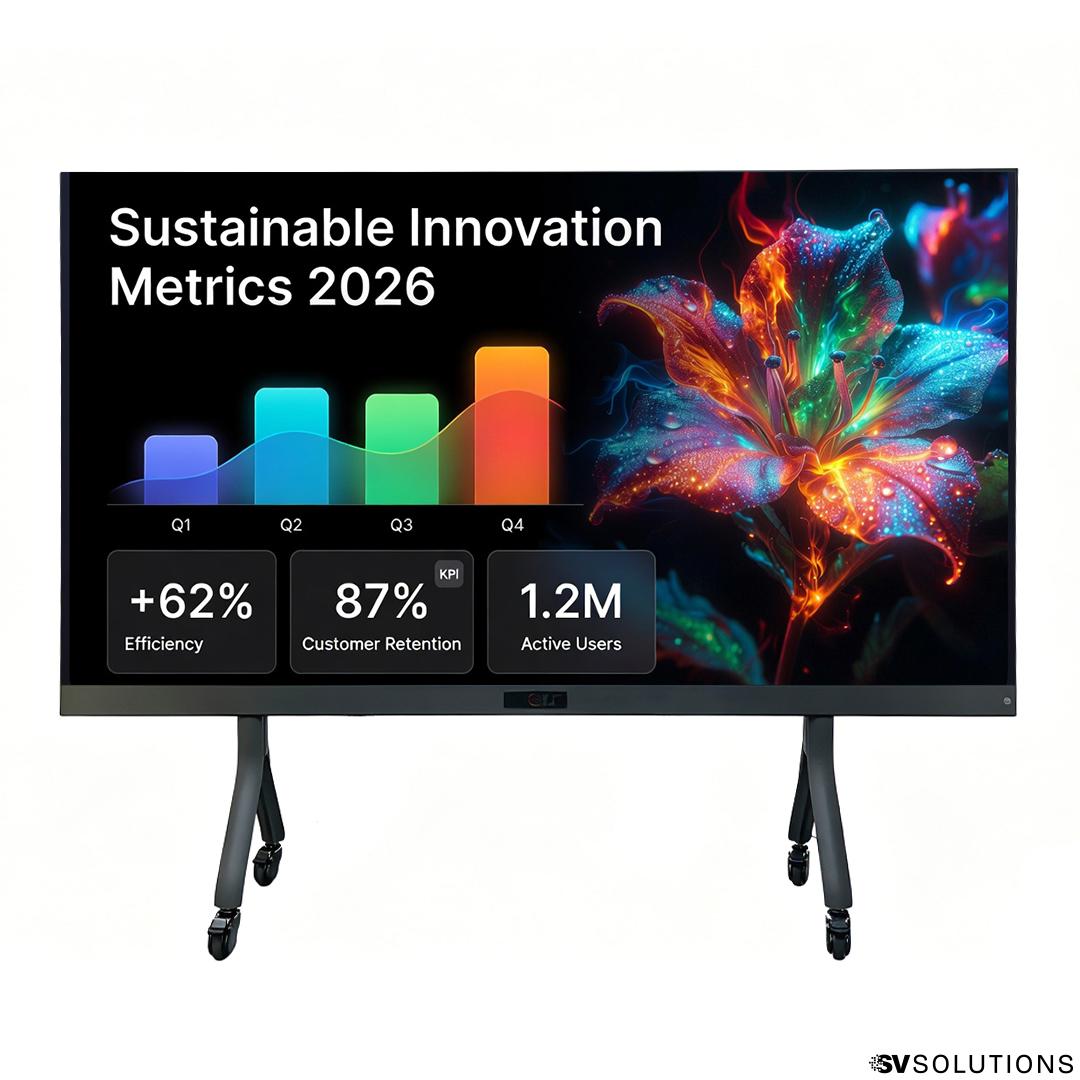
-
Need Help?

Need Help?
Contact your Sales Engineer

Pixel Pitch Explained: What It Really Means for Your LED Screen

LED Screen Buyer's Guide
Pixel Pitch Explained: What It Really Means for Your LED Screen
Pixel pitch is one of the first numbers buyers see when shopping for LED screens. But most explanations stop short of what really matters. Here is what pixel pitch actually means, how it connects to the panels we carry, and why the right partner makes all the difference — anywhere in the U.S.

If you have ever tried to shop for an LED screen, you have almost certainly come across the term pixel pitch. It shows up on every spec sheet, every product listing, and every sales conversation. And yet, most buyers walk away from those conversations still unsure what it actually means — or more importantly, how it should shape their decision.
This guide is here to fix that. We will explain pixel pitch in plain language, show you exactly how it connects to the Lumina panel families we carry at SV Solutions, and give you the practical framework for choosing the right pitch for your space. We will also explain why the number alone is not the whole story — and why who you work with matters just as much as what you buy.
What is pixel pitch — and why does it matter?
Pixel pitch is the distance in millimeters between the center of one LED pixel and the center of the next one. The smaller that number, the more pixels you can pack into the same physical space — which means more detail, sharper images, and the ability to view the screen from closer distances without seeing the individual dots.
A 1.5mm pixel pitch means each pixel is spaced 1.5 millimeters from its neighbor. A 4mm pitch means that gap is wider, so the pixels are larger and fewer — which is fine for big screens viewed from a distance, but not ideal for close-range applications.
Think of it like print resolution. A newspaper photo and a magazine photo can both look fine — but only from the right distance. Hold the newspaper too close and it falls apart. The same logic applies to LED screens.
Smaller pitch = more pixels per area
A 0.93mm or 1.5mm pitch packs far more LEDs into the same panel size. That means sharper images, smoother gradients, and the ability to stand close without seeing the individual pixel grid.
Larger pitch = wider pixel spacing
A 3.9mm or 4mm pitch has fewer LEDs per panel. That is completely fine for large-format installs viewed from 10 feet or more — and usually offers a more budget-friendly entry point.
The viewing distance rule: how pixel pitch and space connect
There is a practical guideline that helps connect pixel pitch to the right environment. It is not a perfect formula — room shape, ambient light, and content all play a role — but it gives you a solid starting point.
The most common rule of thumb: multiply the pixel pitch in millimeters by 8 to get the approximate minimum comfortable viewing distance in feet. So a 2.6mm screen has a minimum comfortable distance of roughly 20 feet. A 4mm screen, around 32 feet.
Pixel pitch × 8 ≈ minimum comfortable viewing distance (feet)
Use this as a starting point — not a hard limit. Viewing angle, room brightness, and content type all affect the final experience.
This is exactly why we do not just hand customers a spec sheet and walk away. The right pitch depends on the actual room — the layout, the seating, the ceiling height, and how people will use the display. Our team works through that with you before we ever recommend a panel.
Pixel pitches across our Lumina panel lineup
At SV Solutions, our panel lineup spans six different pixel pitch options across four indoor panel families, plus one outdoor option. Each one is engineered for a different environment and a different viewing scenario. Here is how they break down.
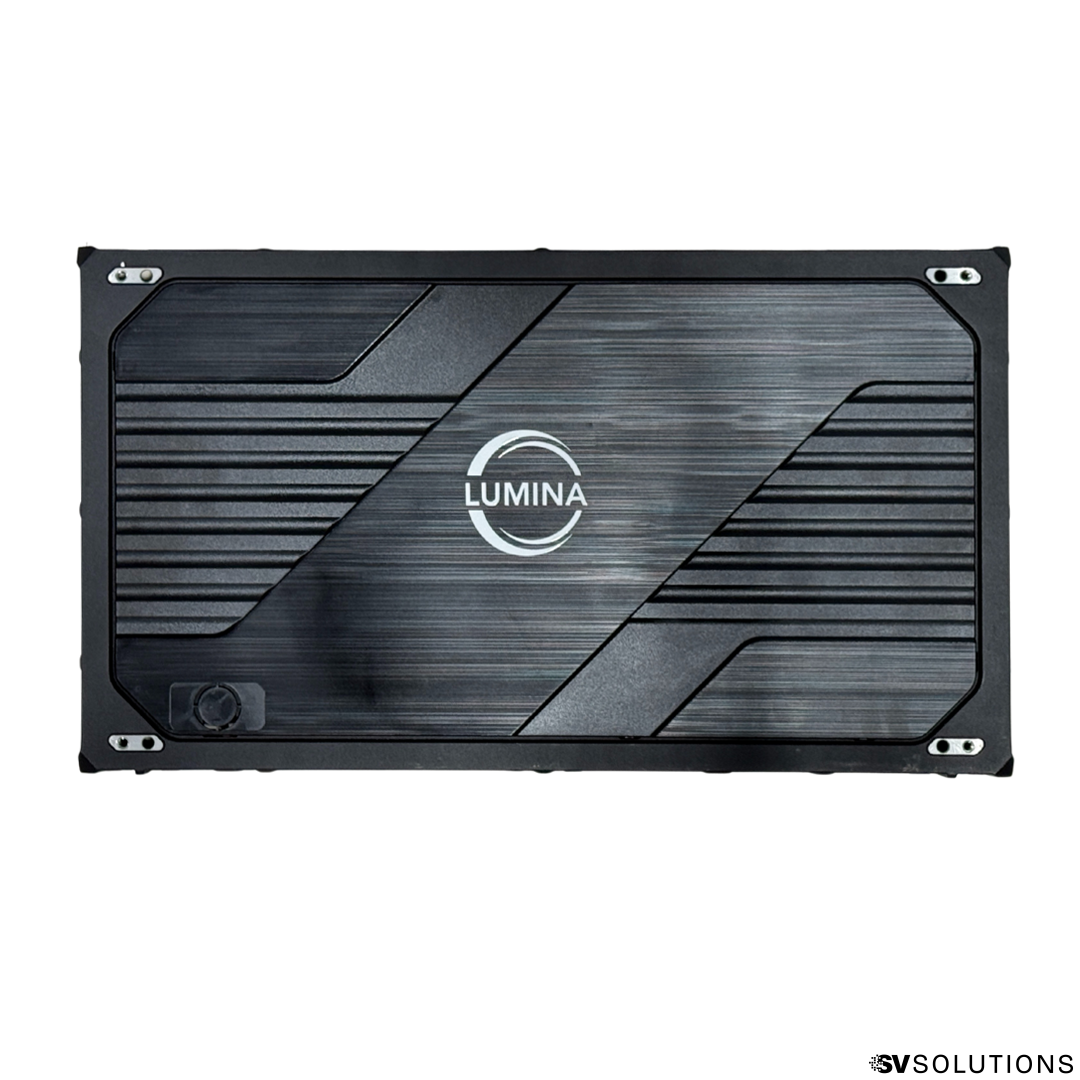
Lumina MicroLED
P0.93mm — Ultra Fine Pitch
Our top-tier option for environments where viewers sit or stand very close to the display. Flip-Chip COB architecture delivers exceptionally sharp images with a contrast ratio of ≥ 10,000:1. Built for premium control rooms, high-end corporate visualization walls, and any application where a standard pitch would fall short.
Best for: Control rooms, premium boardrooms, visualization walls, ultra close-range applications
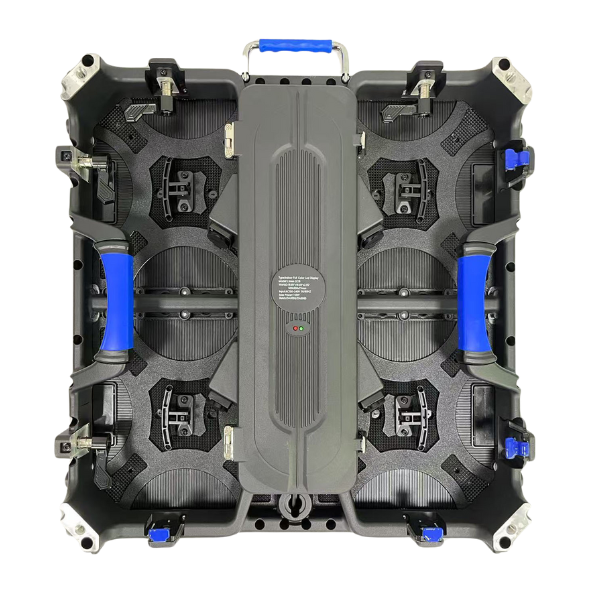
Lumina 500 & Nanolite
P1.5mm — Premium Close-Range
Available in both the 500 and Nanolite series, the 1.5mm pitch is built for higher-detail environments where viewers are closer to the screen. The 500 P1.5 uses a 4-layer PCB and G.O.B nano-coated surface. The Nanolite P1.53 adds Kinglight black SMD1212 LEDs and a slimmer, lighter premium cabinet at just 5.1kg per panel.
Best for: Conference rooms, premium event backdrops, design-sensitive interiors, corporate showrooms
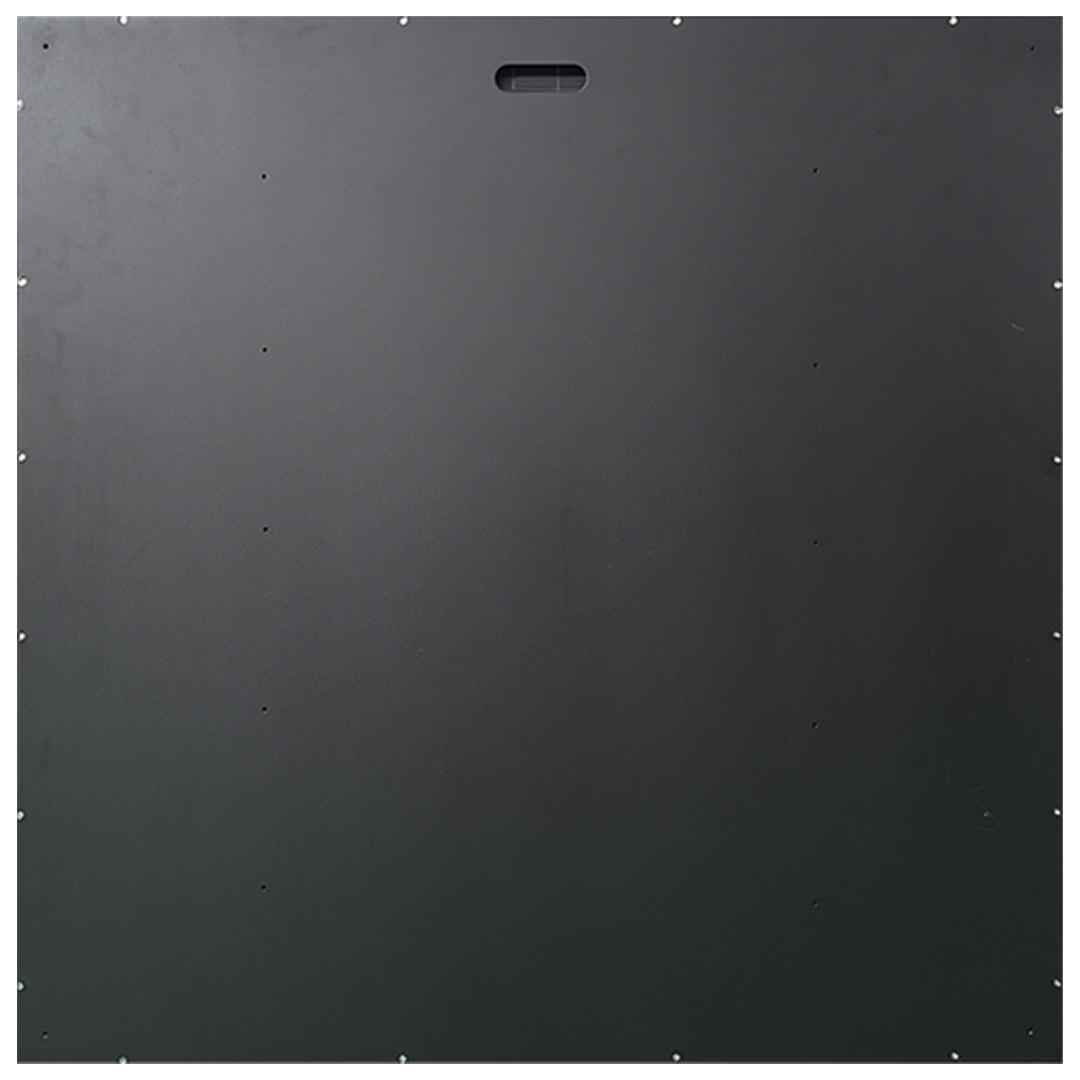
Lumina 960
P2.5mm — Accessible Fixed Install
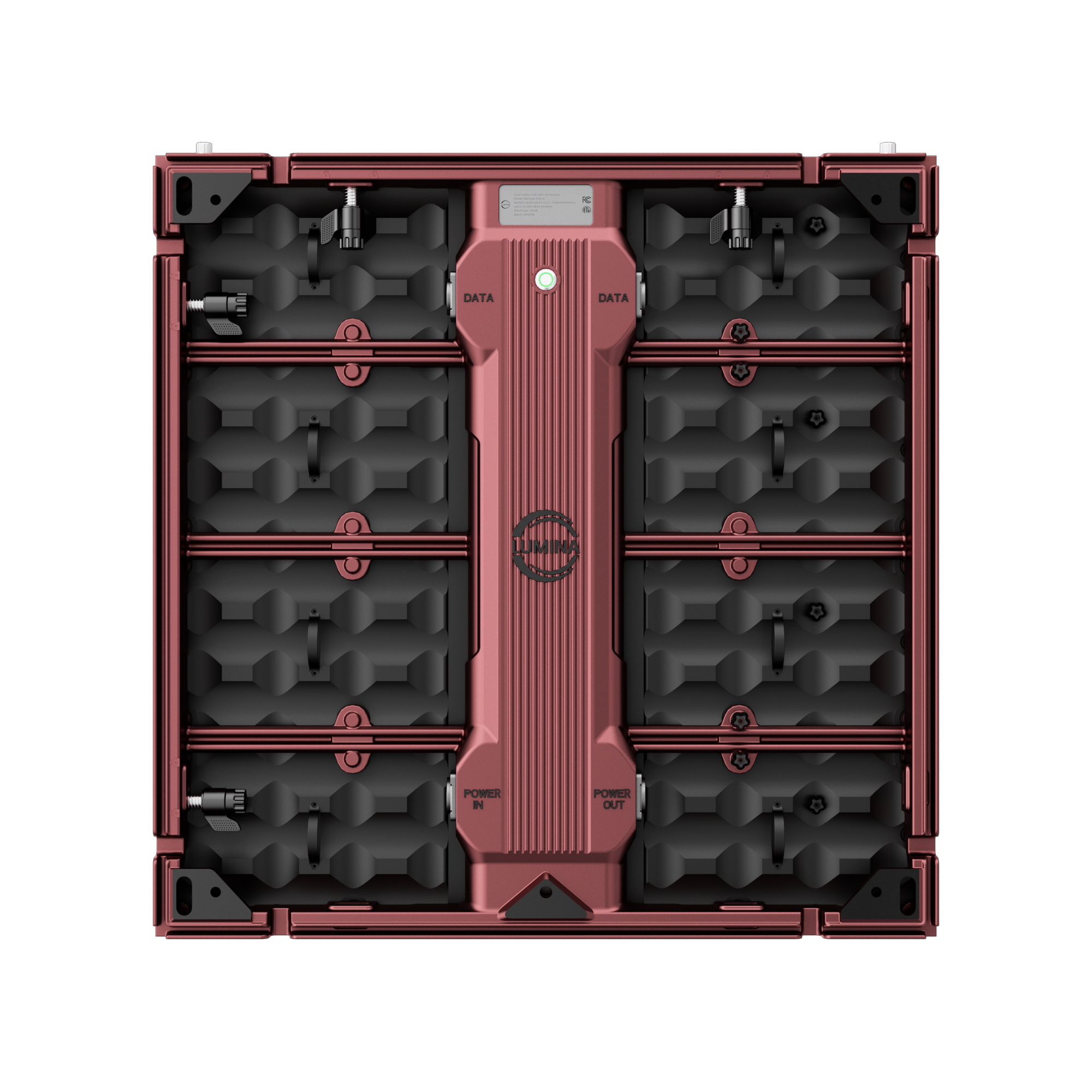
The 960 P2.5 is the most accessible way to get into a detailed pixel pitch without moving into a premium cabinet family. Full die-cast aluminum front, iron back, ± 0.3% alignment tolerance, and full front service. 3840Hz refresh rate and 13-bit grayscale deliver a clean and dependable image for fixed installs.
Best for: Churches, corporate offices, control rooms, architectural video walls
Lumina 500 & Nanolite
P2.6mm — Most Versatile Range
The 2.6mm pitch is the sweet spot for a huge range of real-world installations. In the 500 series, it offers a strong balance between performance and flexibility with nano-sealed coating and soft cable module connection. In the Nanolite series, it steps up to a slimmer premium cabinet with hard connection design and Sinyopto black SMD1515 LEDs — ideal for more refined environments.
Best for: Churches, conference rooms, event spaces, exhibitions, corporate installs
Lumina 500 & Nanolite
P3.9mm — Mid-Range Environments
The 3.9mm option delivers clean performance for larger spaces where viewing distances are longer. The 500 P3.9 offers 800 nits brightness and 15-bit grayscale. The Nanolite P3.9 keeps the same premium slim cabinet with Sinyopto black SMD2020 LEDs for larger venue installs that still want a more refined panel system.
Best for: Larger venues, auditoriums, rental staging, mid-range commercial installs
Lumina 960 Outdoor
P4mm — Outdoor Applications
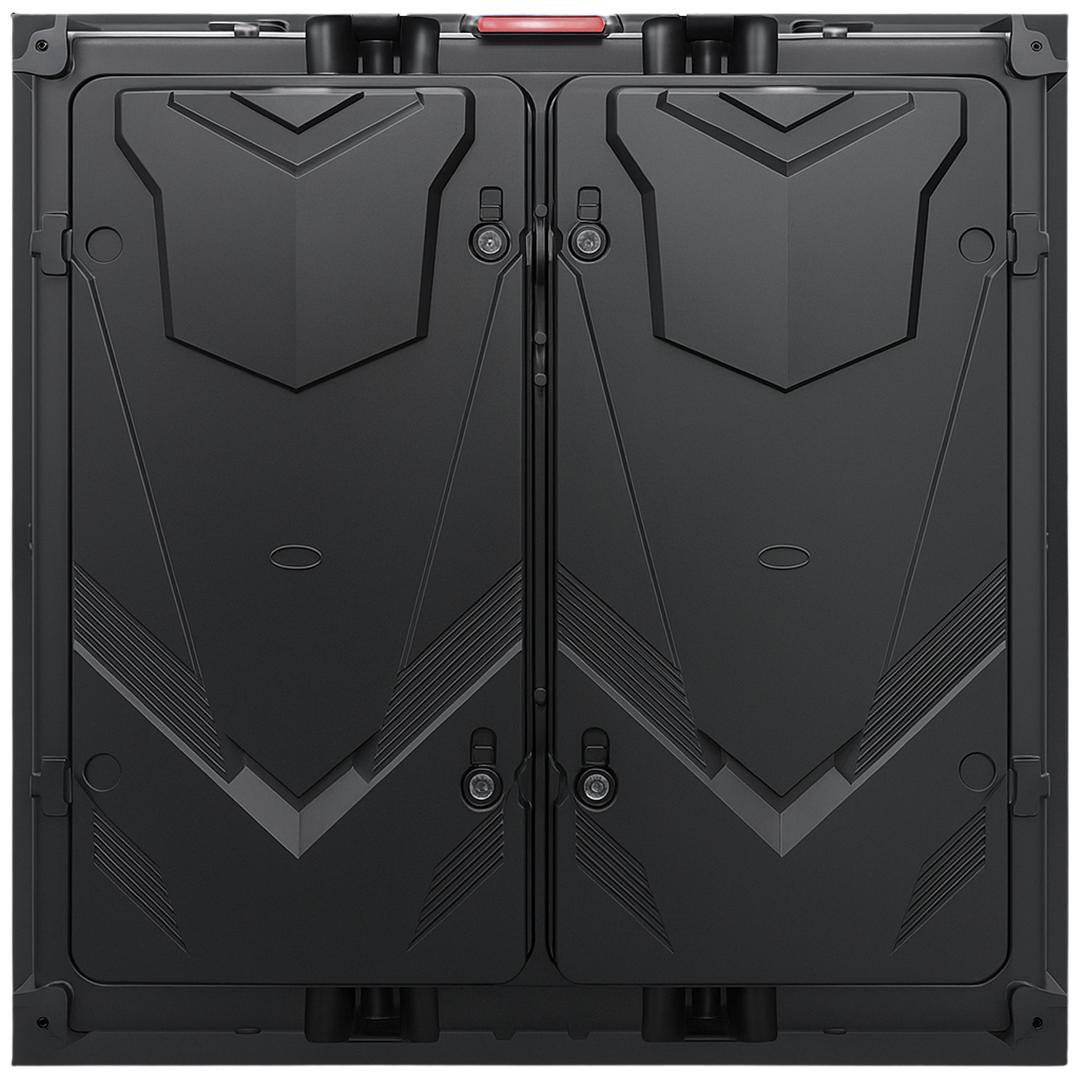
For outdoor applications, the 960 P4 Outdoor is engineered for demanding exterior environments. IP65 protection, 6000 nits of brightness, 7680Hz refresh rate, and 15-bit grayscale. Built for billboards, sports venues, jumbotrons, show façades, and any fixed exterior installation where weather resistance and long-range visibility are critical.
Best for: Billboards, outdoor venues, sports screens, building façades, exterior installs
All pixel pitches — quick comparison
Here is a side-by-side view of every pitch option in our lineup, the panel family it belongs to, and the ideal environment for each.
| Pixel Pitch | Panel Family | Cabinet Size | Refresh Rate | Best Viewing Distance | Ideal Environment |
|---|---|---|---|---|---|
| P0.93mm | Lumina MicroLED | 600 × 337.5mm | High | ~8 ft minimum | Control rooms, premium close-range |
| P1.5mm | Lumina 500 / Nanolite | 500 × 500mm | Up to 7680Hz | ~12 ft minimum | Conference rooms, premium corporate |
| P2.5mm | Lumina 960 | 960 × 960mm | 3840Hz | ~20 ft minimum | Churches, offices, fixed installs |
| P2.6mm | Lumina 500 / Nanolite | 500 × 500mm | Up to 7680Hz | ~20 ft minimum | Churches, events, exhibitions, corporate |
| P3.9mm | Lumina 500 / Nanolite | 500 × 500mm | Up to 7680Hz | ~31 ft minimum | Larger venues, auditoriums, rental |
| P4mm (indoor) | Lumina 960 | 960 × 960mm | 3840Hz | ~32 ft minimum | Large venue, lobbies, bigger spaces |
| P4mm (outdoor) | Lumina 960 Outdoor | 960 × 960mm | 7680Hz | ~32 ft minimum | Billboards, façades, sports venues |
Pixel pitch is just one number. The screen is the whole system.
Here is something most buyers do not hear until it is too late: pixel pitch tells you the spacing between LEDs. It does not tell you the quality of the image you will actually see.
Two screens with the same pixel pitch can look completely different in a real install. The difference comes from the components inside — the receiving cards, the control ecosystem, the driver ICs, the power supplies, the PCB construction, the calibration workflow, and the quality philosophy behind the whole system.
That is why every Lumina panel at SV Solutions is paired with a clearly defined hardware chain — including NovaStar receiving cards and proven power supplies — not because we want to confuse you with specs, but because what is inside the screen is what you actually see on the screen.
Key Point
What to evaluate beyond pixel pitch
- The receiving card — advanced cards like the Nova A8s-N support higher grayscale calibration and better image processing
- The refresh rate — higher refresh (3840Hz–7680Hz) means smoother motion and cleaner camera reproduction
- The grayscale depth — 13-bit and 15-bit grayscale affect how smoothly dark and shadow areas render
- The LED quality — black LED dies like SMD1515 and SMD2020 improve contrast and color richness
- The surface treatment — G.O.B nano-coated panels resist moisture and improve durability
- The cabinet engineering — slim, hard-connection designs like Nanolite signal a more premium build overall
The right pixel pitch is only part of the decision. The right partner is the other half.
SV Solutions is the company that covers the whole U.S., sends traveling technicians, works with top installers, and backs every install with the kind of five-star track record that puts those claims to the test. From single-location churches in Texas to multi-state fitness chains coast to coast — we have done it, and we can prove it.
Nationwide coverage means the right pitch finds the right room — everywhere
Pixel pitch selection is always tied to the physical environment. That means getting it right requires someone who can actually evaluate the space — not just email you a spec sheet. SV Solutions covers the whole U.S. with traveling technicians and top installers who have worked in real rooms, real venues, and real environments across all 50 states.
All 50 states supported
From single-location projects to multi-state rollouts, SV Solutions is built to deliver consistent LED screen support across the country. That means one partner for planning, installation, warranty guidance, and future expansion — wherever your project is located.
Companies like LA Fitness and Club Studio trust SV Solutions for locations across the U.S. because consistency, long-term support, and real field execution matter at that scale.

Built for projects beyond one city
Local proximity helps. Real field reach across all 50 states is what sets SV Solutions apart.
The people behind the installs matter
Pixel pitch is a number. An install is a real project, in a real room, executed by real people. When you work with SV Solutions, you are working with a team that shows up, coordinates logistics, and stands behind every project — from first call to final pixel. These are the people making it happen.



Five-star results: from pitch selection to final install
The right pixel pitch recommendation is only valuable if the install itself is executed correctly. These reviews reflect both — the product knowledge that goes into the recommendation and the professional execution that follows.
SV Solutions installed a brand new LED screen at our church, and the entire experience was excellent from the very first phone call to the final installation. Everything was handled professionally, and Isaac did an outstanding job with the install. Highly recommend SV Solutions!
— Calvin GaineyI had an amazing experience from the selection process throughout the installation support and configuration by Isaac, quick response to all inquiries and knowledgeable and approachable team!
— Rodrigo VaqueranoIn a category where many companies sound similar on paper, this kind of feedback helps confirm that the support, communication, and technical guidance behind the product are real too.
See more reviewsCommon pixel pitch mistakes (and how to avoid them)
After years of helping buyers spec LED screens across every kind of venue, we see the same pixel pitch mistakes repeatedly. Here is what to watch for before you commit.
- Choosing the smallest pitch you can afford "just to be safe." Finer pitch costs more per square foot and gives you nothing your audience can see if they sit 20 feet back. P2.6 looks identical to P1.5 at standard auditorium distance — the dollars vanish into invisible detail.
- Specifying pitch without measuring the closest viewing distance. Closest distance, not average distance, drives the decision. If even one row of seats sits within the minimum threshold for your pitch, you will see the pixel grid from there.
- Forgetting that brightness and contrast matter as much as pitch. A 600 NIT P1.5 panel in a sun-flooded lobby looks worse than a 6,000 NIT P4 outdoor panel in the same space. Pitch sharpens the image; brightness makes it readable.
- Treating "pixel pitch" and "4K-ready" as the same conversation. A wall's resolution is determined by its physical size and the chosen pitch, not by a marketing label. Always confirm native panel count × pixels-per-panel gives you the resolution your content actually needs.
- Ignoring the wall's physical size constraint. A P1.5 wall that needs to be 12 feet wide requires far more cabinets than a P3.9 wall the same width. More cabinets means more weight, more power, more cooling, and a bigger structural backing — costs that don't show up in the per-panel price.
- Skipping the content side of the equation. A P1.5 wall fed 720p video looks worse than a P2.6 wall fed native 4K. The pitch you specify should match the resolution of the content you actually plan to display.
How real clients picked the right pitch
Six recent SV Solutions installs, each one a different pitch decision. Notice that the right answer depends on the room — not the budget alone.
LA Fitness — Club Studio
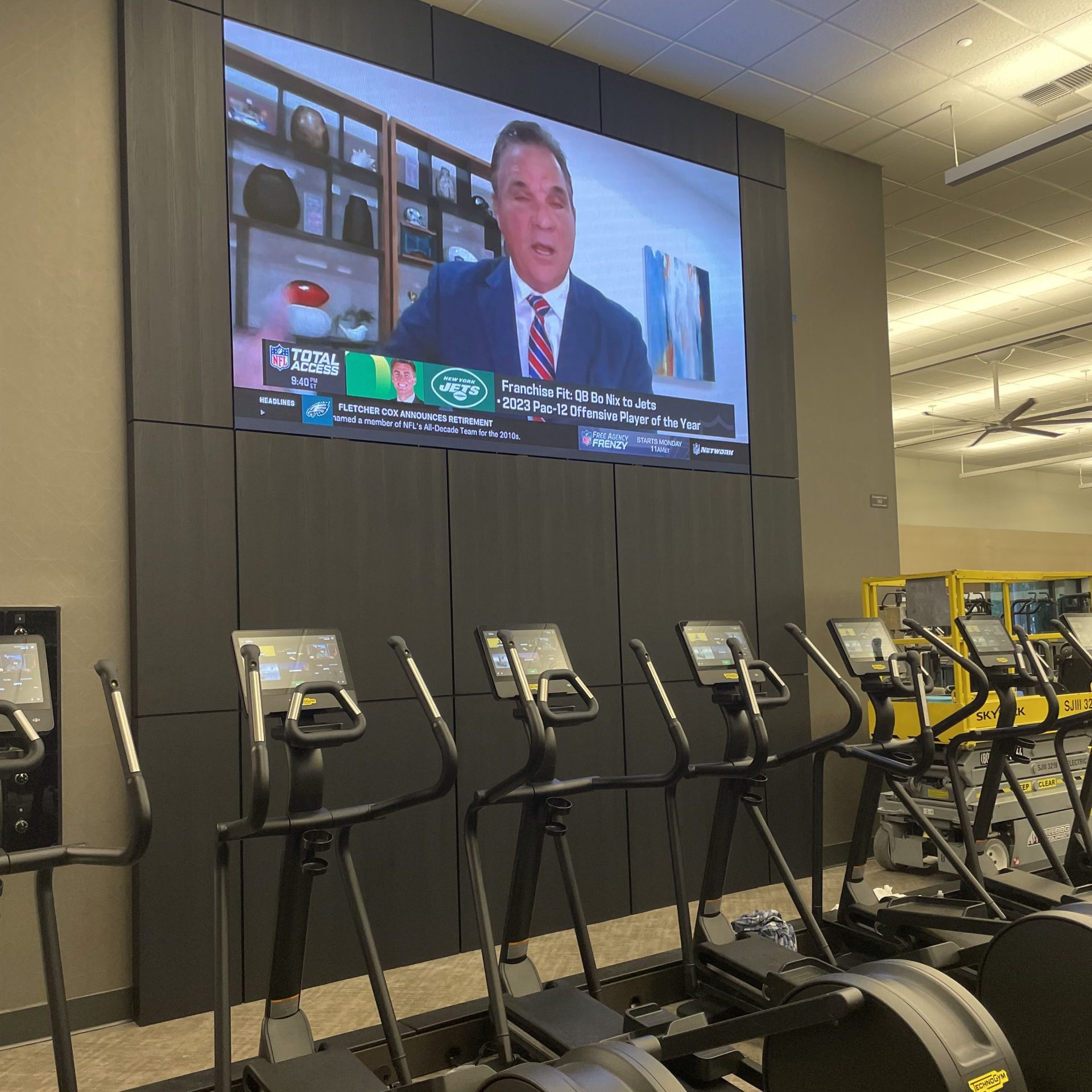
Premium fitness studio with members positioned close to the screen during classes. Required fine pitch to keep the image sharp at conversational distance.
View case study →
The Meadows School
Theatrical auditorium with audience seated 15 to 50 feet from the stage. Mid-range pitch balanced sharpness for the front rows with budget across the full wall.
View case study →
Pisco Gastrolounge
Restaurant ambience wall viewed from dining distance. The right pitch made the wall feel like decor — not like a screen — across the entire room.
View case study →
Westfield UTC
High-traffic mall signage seen from 15+ feet by shoppers in motion. Pitch was chosen to maximize legibility and reach within retail budget realities.
View case study →
Wisdom Properties
Corporate lobby with visitors approaching the wall closely. Fine pitch was non-negotiable for brand impressions inside conversational distance.
View case study →
World Shakers Faith Ministries
Sanctuary with congregation seated 20 to 80 feet from the stage. Mid-range pitch delivered the visual impact pastors expect without the premium-pitch cost.
View case study →Frequently asked questions about pixel pitch
What does pixel pitch mean in simple terms?
Pixel pitch is the distance in millimeters between the center of one LED pixel and the center of the next. A smaller number means more pixels packed into the same area — sharper image, better detail, closer minimum viewing distance.
How do I know which pixel pitch is right for my space?
The most practical starting point is viewing distance. A common rule of thumb: pixel pitch × 8 ≈ minimum comfortable viewing distance in feet. A 2.6mm pitch works well for rooms where viewers are roughly 20 feet away. A 4mm pitch is better suited for large venues where the screen is viewed from farther away. Our team helps you apply this to your actual room.
Is a smaller pixel pitch always better?
Not necessarily. A smaller pitch means more LEDs, which typically means a higher cost. If your viewers are far from the screen, a finer pitch adds cost without a visible benefit. The right pitch is the one that matches the actual viewing environment — not the lowest number available.
What pixel pitches does SV Solutions carry?
Our Lumina lineup covers P0.93mm (MicroLED), P1.5mm (500 and Nanolite), P2.5mm (960), P2.6mm (500 and Nanolite), P3.9mm (500 and Nanolite), P4mm indoor (960), and P4mm outdoor (960 Outdoor). That gives buyers options from ultra-fine pitch to large-format outdoor across four distinct panel families.
Can two screens with the same pixel pitch look different?
Yes — significantly. Pixel pitch is just the LED spacing. What you actually see depends on the receiving card, the grayscale depth, the refresh rate, the LED quality, the calibration, and the overall build of the panel. Two screens with matching pitches but different internal components can deliver very different visual results.
Does SV Solutions support installs outside of Texas?
Yes. SV Solutions supports LED screen projects across all 50 states with traveling technicians and nationwide installation capability. We are not a local AV company — we are a U.S.-wide LED screen partner built to deliver consistent professional installs wherever the project is located.
What is the difference between the 500 series and the Nanolite series at the same pixel pitch?
Both offer 1.5mm, 2.6mm, and 3.9mm options. The 500 series uses a 500 × 500mm rental-style frame with strong fixed-install potential and soft cable module connections. The Nanolite series is a more premium panel family — slimmer at only 42mm deep, lighter at 5.1kg per panel, hard connection design with no internal module cabling, and ETL/FCC certified. If the project demands a more refined cabinet and premium product feel, Nanolite is the better choice at the same pitch.
Do not guess on pixel pitch. Talk to a team that knows the difference.
The right pixel pitch for your project depends on your room, your viewing distance, your use case, and your budget. SV Solutions helps you navigate all of it — with real product knowledge, nationwide reach, top installers, and the five-star track record to back it up.
- Tell us where the screen will be installed
- Tell us your approximate viewing distance
- Tell us if you need indoor, outdoor, fixed, or flexible use
- Tell us your budget range and timeline
From P0.93mm control rooms to P4mm outdoor billboards — we have the panels, the team, and the nationwide reach to get it done right.
Talk to an Expert