-
Need Help?

Need Help?
Contact your Sales Engineer

OLED vs LED Video Wall: Complete Comparison 2026
DISPLAY COMPARISON · 2026
OLED vs LED Video Wall: Complete Comparison
Both are self-emissive — but OLED tops out around 97″ and has burn-in risk, while LED video walls scale to any size and run 24/7 without burn-in. Here's how they compare across brightness, contrast, lifespan, and where each one wins.

The short version
OLED (Organic LED) and LED video walls share one big advantage over LCD: both are self-emissive, meaning each pixel produces its own light. But the similarities mostly end there. OLED is a TV/monitor technology — single integrated panels, 55–97″ practical sizes, organic compounds with burn-in risk and ~30,000-hour lifespan. LED video walls are modular display matrices — unlimited size, inorganic LEDs with no burn-in, ~100,000-hour lifespan, built for commercial 24/7 operation.
How each technology works
OLED displays
OLED (Organic Light Emitting Diode) panels are made of organic carbon-based compounds that emit light when electrical current passes through them. Each pixel is its own emitter — no backlight needed, which is why OLED achieves true blacks (the pixel simply turns off). Sold by LG (the dominant panel manufacturer), Samsung (QD-OLED line), Sony, and others, OLED comes as integrated TV or monitor units in standard sizes (typically 42″ to 83″, with LG offering up to 97″ as their flagship 4K and 88″ 8K).
LED video walls
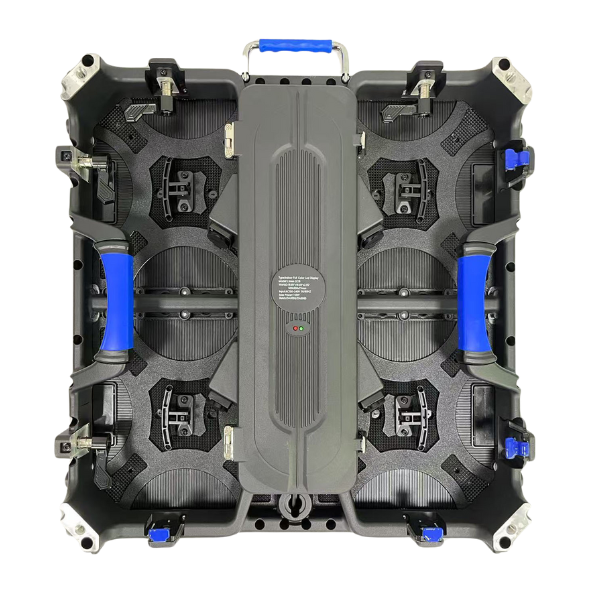
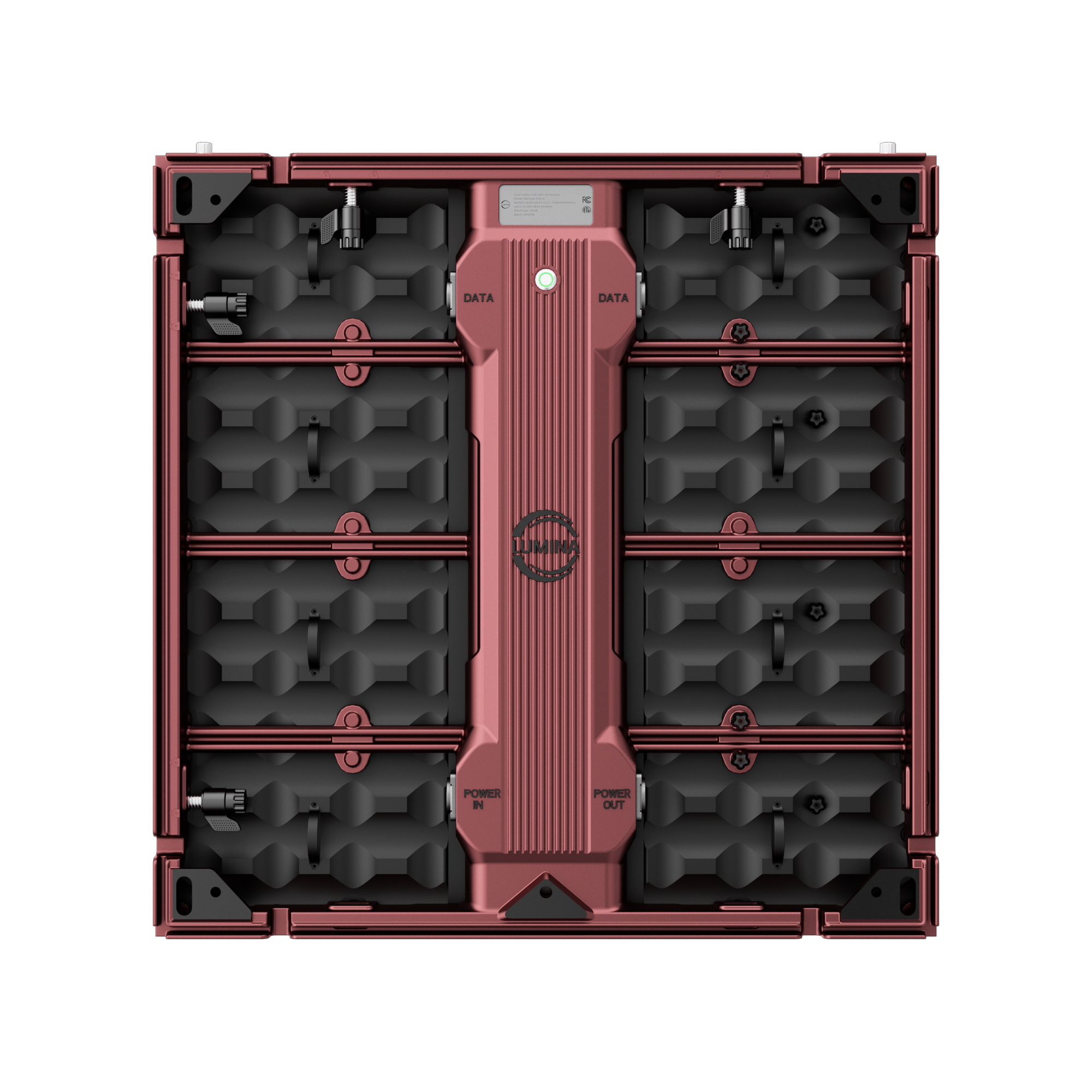
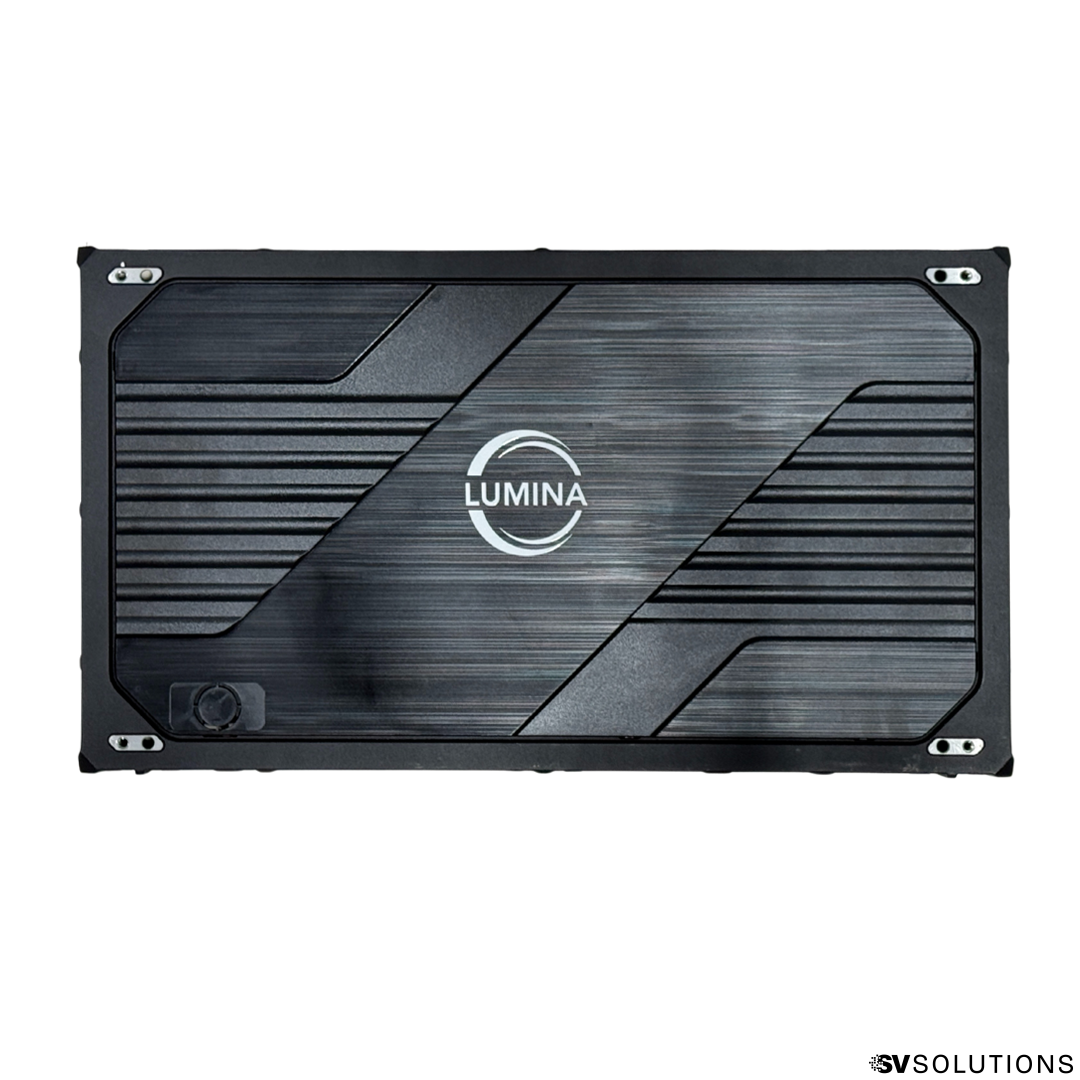
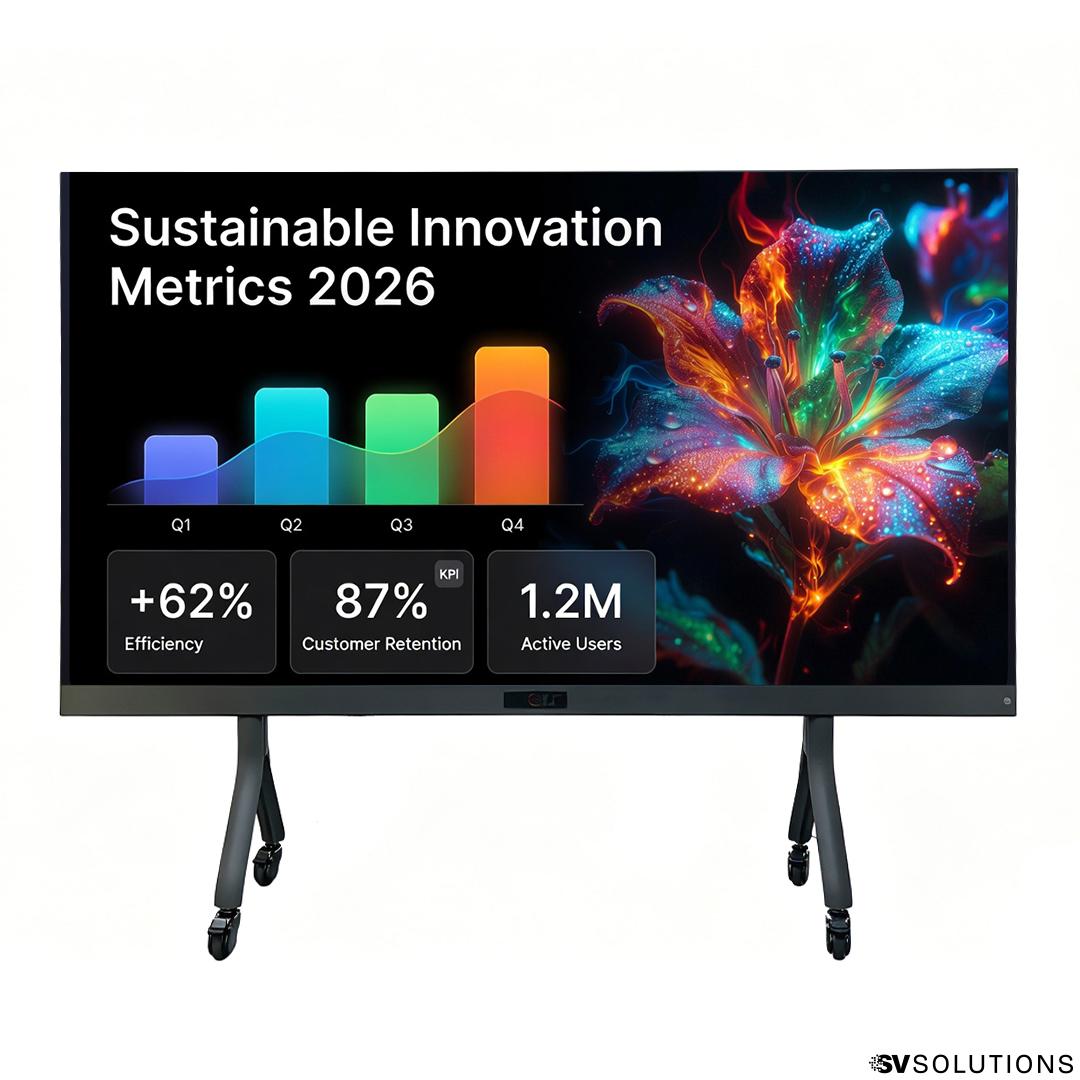
LED video walls use inorganic LED chips (gallium-based semiconductors) where each pixel is a direct LED emitter. They're built as modular panels (e.g. our LUMINA 500 series uses 500×500 mm cabinets, the 960 series uses 960×960 mm cabinets) that you tile to any size. Each panel contains thousands of individual LED pixels, controlled by a NovaStar processor (see our NovaStar processors guide). Our LUMINA bundles ship in 119 standard sizes from 116″ to 360″.
Side-by-side spec comparison
| Specification | OLED Display | LED Video Wall (SV LUMINA) |
|---|---|---|
| Pixel structure | Self-emissive organic compounds | Self-emissive inorganic LED chips |
| Max practical size | Up to 97″ (LG flagship); 88″ for 8K | Modular, any size; standard bundles to 360″ |
| Brightness (sustained) | 200–400 NITS typical | 600–800 NITS indoor; 6,000 NITS outdoor |
| Brightness (peak HDR) | 600–1,000 NITS in highlights | Same as sustained (LED chips don't burst) |
| Contrast ratio | "Infinite" — pixels turn off completely for true black | ≥5,000:1 (LUMINA 500/960); ≥10,000:1 (MicroLED COB) |
| Burn-in risk | Yes — organic compounds degrade with sustained static content | No — inorganic LEDs do not burn in |
| Response time | <1 ms (instant) | Instant (each LED is direct) |
| Viewing angle | 178°/178° (premium OLED) | 160°/160° (LUMINA 500/960); 170°/170° (Nanolite) |
| Lifespan | ~30,000 hours to half-brightness | ~100,000 hours typical for LED chips |
| Outdoor capability | Not designed for outdoor use | Native outdoor IP65 (LUMINA 960 Outdoor 4mm) |
| Serviceability | Replace whole panel on failure | Module-level swap; spare modules included |
| Power consumption | Varies with content (dark scenes use less) | ~130 W/m² average; up to 450 W/m² peak (Nanolite/500); 750W per panel peak (Outdoor) |
| Typical use case | Home theater, gaming, premium monitors, broadcast reference | Commercial signage, events, broadcast LED stages, churches, sports, retail |
| Starting price | ~$1,200 for 55″ OLED TV | $9,520 for 136″ LUMINA 960 Indoor 4mm complete bundle |
OLED specs reflect industry-typical ranges from current LG OLED, Samsung QD-OLED, and Sony OLED product lines as of 2026. LED Video Wall specs are SV Solutions LUMINA verified specs from our panel datasheets.
Where OLED wins
For consumer and certain professional applications, OLED has clear advantages:
- Absolute black levels and contrast — When an OLED pixel is off, it emits no light. That gives a perfect (infinite) contrast ratio. LED video walls have very strong contrast but they don't reach absolute black the same way because of ambient reflections and pixel structure.
- HDR peak brightness within sustained limits — OLED can hit 1,000 NITS peak in small HDR highlights while keeping the rest of the image dark. For HDR-mastered home theater and reference monitoring, that's beautiful.
- Home theater and gaming — Under 97″ for TV/monitor use, OLED is the technology of choice for cinephiles, color-critical professionals, and gamers (instant response, no input lag from backlight processing).
- Premium single-room installation — When the room is dark, the viewer sits 8–12 ft from a 65–83″ panel, and image quality matters more than size, OLED is hard to beat at the price point.
- Color-critical reference work — Broadcast reference monitors and color-grading suites often use OLED for its color accuracy and black levels.
Where LED video walls win
For commercial, large-format, and high-brightness use, LED video walls win decisively:
- Anything larger than ~97″ diagonal — OLED tops out at 97″ as the largest practical single panel. LED video walls scale to any size. If your project is 110″, 220″, or 360″ diagonal, LED is the only practical answer.
- 24/7 commercial operation — Burn-in is a real OLED concern for digital signage that displays the same logo, ticker, or static layout 24/7. LED video walls have no burn-in — they run static content indefinitely without pixel degradation.
- Outdoor or high-ambient-light environments — OLED maxes out around 1,000 NITS in HDR peak (much lower sustained). Our LUMINA 960 Outdoor delivers 6,000 NITS sustained, with IP65 weatherproofing and -20°C to +70°C operating range.
- Long-term commercial deployment — LED chips run ~100,000 hours typical vs ~30,000 hours for OLED panels. For commercial use running 12+ hours a day, that's the difference between ~7 years (OLED) and ~22+ years (LED video wall) of service before half-brightness.
- Custom aspect ratios and shapes — OLED comes in fixed 16:9 sizes. LED video walls are built from any panel count — 21:9 ultra-wide, square, multi-screen layouts, curved configurations all work.
- Module-level serviceability — When an OLED panel fails, you replace the whole panel ($$$). When a module in an LED video wall fails, swap that one module in minutes with the supplied magnetic puller. Spare modules ship with every bundle.
- Multi-source live event work — LED video walls with NovaStar MX-series processors handle multi-source layer mixing (camera feeds + content + graphics). OLED panels are single-source displays.
The burn-in question (this matters a lot)
Burn-in is the single most important difference for commercial use. OLED's organic light-emitting compounds degrade unevenly when specific pixels are illuminated continuously — over months of running a static logo or news ticker, those pixels permanently dim relative to surrounding pixels. The result is a ghost image of the static content visible in all other content.
OLED manufacturers mitigate burn-in with pixel-shifting algorithms, screen savers, and content management warnings. But the underlying physics doesn't change: organic = degradable.
LED video walls use inorganic gallium-based LED semiconductors. There's no organic compound to degrade. Sustained static content has no special impact on long-term pixel performance. For commercial signage, broadcast tickers, retail brand displays, sports scoreboards, and any other 24/7 application, this single difference is often the deciding factor.
Brightness reality check
OLED's "1,000 NITS HDR peak" sounds impressive but it's a peak in small highlights (a sparkle, a sun glint) within a mostly darker frame. Sustained full-screen brightness on OLED is typically 200–400 NITS — fine for dim home theater, not enough for retail or outdoor.
Our LUMINA 500/Nanolite indoor panels run 600–800 NITS sustained across the entire surface. The LUMINA 960 Outdoor runs 6,000 NITS sustained — that's roughly 15–30× the sustained brightness of OLED. For outdoor signage, retail with large windows, or any environment with strong ambient light, LED video walls are the only viable choice.
Cost comparison at common sizes
| Size target | OLED option (typical) | LED video wall (SV) | Notes |
|---|---|---|---|
| ~65″ | $1,500–$3,500 OLED TV | Not available — below our minimum 116″ | OLED wins decisively at this size |
| ~83″ | $4,000–$8,000 OLED | Not available — below 116″ | OLED wins |
| ~97″ | $15,000–$25,000 (LG flagship OLED) | Not available — below 116″ | OLED is the only single-panel option |
| ~116″ | Not available as OLED single panel | $9,735 (LUMINA 500 3.9mm) or $11,415 (Nanolite 3.9mm) | LED video wall is the only option |
| ~136″+ | Not available as OLED | $9,520+ (LUMINA 960 Indoor 4mm) | LED video wall only |
Decision framework
Pick OLED when:
- Diagonal target is 55–97″
- Single-room consumer or executive setup
- Home theater, gaming, or color-critical reference work
- Dark/controlled lighting environment
- Variable content (no static signage 24/7) — burn-in not a concern
- Budget under $25,000 and you need under 97″
Pick LED video wall when:
- Diagonal target is 116″ or larger
- Commercial 24/7 operation with static or semi-static content
- Outdoor or high-ambient-light environment (retail with windows, sports, stadium)
- Bezel-less wall-to-wall surface required
- Custom aspect ratio (ultra-wide, square, curved)
- Long expected operational lifespan (7+ years of heavy use)
- Live event use with multi-source mixing
- Module-level serviceability matters
What about MicroLED — is it OLED or LED?
MicroLED is closer to LED video wall technology than OLED, despite the confusing name. "Micro" refers to the tiny size of each LED die (often under 100 microns). Each pixel is an inorganic LED, like in our LUMINA 960 series — just packed at much finer pitch. Our LUMINA MicroLED COB 0.93mm bundles use this technology to deliver ultra-fine 0.93mm pixel pitch with no burn-in risk, IP54 splash resistance, and 10,000:1 contrast ratio.
MicroLED combines the self-emissive advantage of OLED with the inorganic durability of LED. For ultra-close-viewing applications (3–8 ft), it's the premium choice — see our pricing matrix for sizes from 136″ to 271″.
Common questions
- Is OLED brighter than LED? ▾
Depends on what you mean. OLED can hit ~1,000 NITS peak in small HDR highlights but sustains only 200–400 NITS full-screen. LED video walls sustain 600–800 NITS (indoor) up to 6,000 NITS (outdoor) across the entire surface. For sustained brightness, especially in bright environments, LED video walls are significantly brighter.
- Does OLED really get burn-in? ▾
Yes. The organic compounds that make OLED self-emissive degrade unevenly with sustained pixel use. Static logos, news tickers, channel watermarks, game HUDs, and dashboard content can create permanent ghost images over months. OLED makers warn customers in their manuals and mitigate with pixel-shifting and screen-saver algorithms, but the underlying degradation is a property of the technology. Inorganic LED video walls do not have this issue.
- Why is OLED max size only 97″? ▾
Manufacturing yield. Producing a single defect-free OLED panel gets exponentially harder as size increases. LG (the dominant OLED panel maker) currently offers 97″ as their flagship 4K and 88″ as 8K — beyond that, yield drops too far for commercial production. LED video walls don't have this constraint because each panel is small (500–960 mm) and you tile them to any size.
- Can I use an OLED outdoors? ▾
OLED panels are not designed for outdoor use. The brightness is too low for direct-sun visibility, the panels are not IP-rated for weather sealing, and the organic compounds are sensitive to temperature extremes and humidity. For outdoor LED applications, see our Indoor vs Outdoor LED comparison and the LUMINA 960 Outdoor 4mm bundles.
- Which has better black levels? ▾
OLED — by physics. Each OLED pixel can turn completely off, producing a true black with no light leakage. LED video walls are very dark in off pixels but not absolute zero due to ambient light reflections and pixel structure. For dark-room cinema and color-critical reference work, OLED's black levels are superior. For most commercial/event use in normal-to-bright lighting, the difference is rarely perceptible.
- What's the difference between OLED and MicroLED? ▾
OLED uses organic carbon compounds as the light-emitting material — high contrast and color quality but burn-in risk and shorter lifespan. MicroLED uses tiny inorganic LED dies — same self-emissive advantages as OLED but with no burn-in, longer lifespan, and the ability to scale to any size by tiling. Our LUMINA MicroLED COB 0.93mm is the closest direct comparison if you want OLED-like quality with LED durability.
- Which has longer lifespan? ▾
LED video walls — by a wide margin. LED chips are rated around 100,000 hours to half-brightness. OLED panels typically reach half-brightness around 30,000 hours. At 12 hours/day commercial use, that's roughly 22+ years (LED video wall) vs ~7 years (OLED) before pixel performance degrades meaningfully.
- Can I get an LED video wall in OLED-class small sizes? ▾
Below 116″ diagonal, no — that's the minimum standard bundle in our catalog. The technology can be built smaller as a custom configuration, but the economics don't usually make sense (commercial LCD or OLED is more accessible at 55–97″). For sizes 116″ and up, our LED video walls become competitive and then dominate as size grows.
Picking between OLED, LCD, and LED for your project?
Tell us the size, the viewing distance, the ambient lighting, and what content you'll be running. We'll help you pick the right display technology — and if LED video wall is the answer, we'll quote the right LUMINA bundle. Free consultation, full quote within 24 hours, 4–7 day delivery free across the continental US.
Get a Quote →